Mining sites operate in environments with long-term high dust concentrations, which severely affect workers’ respiratory systems and even cause occupational diseases. The use of dust control fog cannons can significantly reduce dust concentrations in mining sites, providing workers with a relatively clean working environment. Additionally, dust causes wear and corrosion to mechanical equipment; long-term accumulation increases equipment failure rates. Dust control fog cannons can reduce dust damage to equipment, extend equipment service life, and lower maintenance costs. Therefore, selecting the right dust control fog cannon is crucial for mining sites. Below, the editor from Zhenton Fog Cannon will take you through the detailed selection criteria for dust control fog cannons in mining sites.
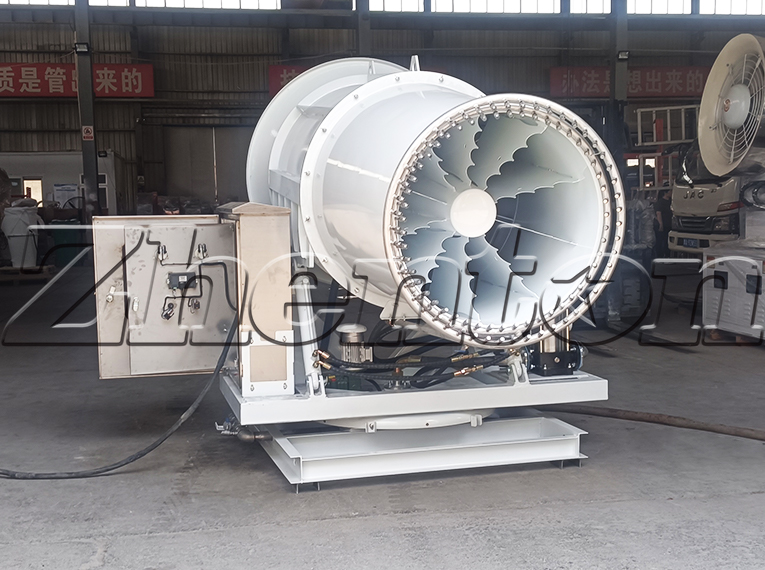
1. Dust Suppression Demand Analysis
Coverage Area: Select the fog cannon’s range and coverage based on the mining site’s size. For large-scale mining sites, choose fog cannons with long range and large spray volume.
Dust Type and Concentration: Understand the type of dust (e.g., coal dust, rock dust) and its concentration generated at the mining site to select a fog cannon model that can effectively address it. For example, for fine particles or areas requiring precise dust suppression, choose models with finer, more evenly distributed spray particles.
2. Installation Method
Fixed vs. Mobile: Choose between fixed or mobile fog cannons based on the mining site’s operating environment and needs. Fixed fog cannons are suitable for fixed production lines or material areas, while mobile ones are more suitable for remote, frequently changing workplaces.
3. Power Supply Method
Power Source: Consider the fog cannon’s power supply method, such as AC power, diesel or gasoline engine drive. This directly relates to equipment usability and cost-effectiveness. For mining sites with stable and sufficient power supply, choose electric-driven fog cannons; for locations with inconvenient power access, select diesel or gasoline engine-driven ones.
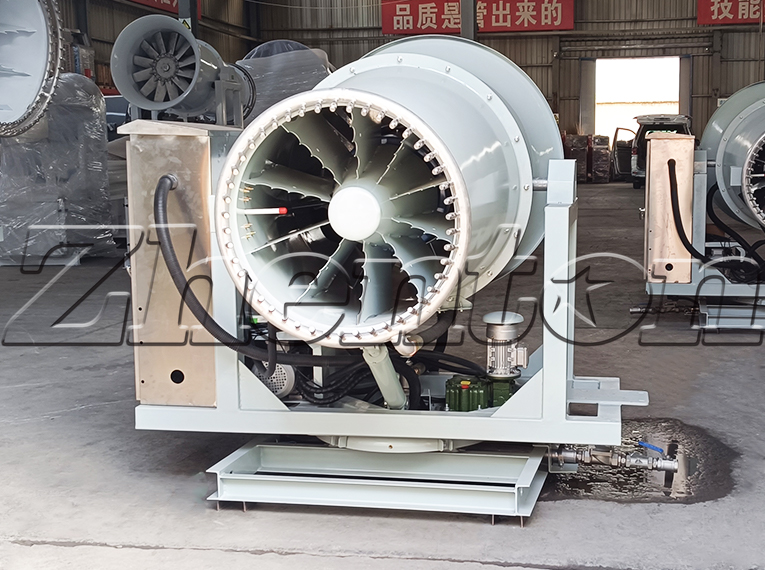
4. Technical Parameters
Total Power: The fog cannon’s total power directly affects its spraying capacity and coverage. Select the appropriate power based on the mining site’s actual needs.
Spray Range and Coverage: These are key indicators of fog cannon performance. Choose a fog cannon whose range and coverage meet the mining site’s requirements.
Number of Nozzles and Nozzle Material: The number of nozzles and their material affect spray uniformity and effectiveness. Select fog cannons with an appropriate number of nozzles and durable nozzle materials.
Control Method: Consider the fog cannon’s control method, such as manual button, wireless remote control, or PLC remote control. Choose a control method that is easy to operate and precise.
5. Reliability and Maintainability
Brand and After-Sales Service: Select well-known brands and fog cannon manufacturers with good after-sales service to ensure equipment quality and reliability. Meanwhile, pay attention to the manufacturer’s spare parts supply to enable timely repair or replacement when equipment malfunctions.
Ease of Maintenance: Consider how easy the fog cannon is to maintain. Choosing fog cannons with simple structures and easy maintenance can reduce maintenance costs and downtime.
6. Environmental Performance
Water Utilization Rate: Evaluate whether the fog cannon’s water utilization rate meets local environmental standards. Choosing water-saving fog cannons can reduce operating costs and reflect the enterprise’s environmental responsibility.
Secondary Pollution Risk: Ensure the selected fog cannon does not pose a risk of secondary pollution (e.g., wastewater discharge) during use.
In summary, the selection of dust control fog cannons for mining sites needs to consider multiple aspects, including dust suppression demands, installation methods, power supply methods, technical parameters, reliability and maintainability, and environmental performance. By comprehensively considering these factors, you can select a dust control fog cannon model that meets both the mining site’s actual needs and is cost-effective.