Open-pit mining operations face some of the most severe dust challenges in the industrial sector. Continuous blasting, excavation, material handling, and heavy vehicle movement generate large volumes of fine particulate matter. Unlike enclosed facilities, open-pit mines are fully exposed to wind, temperature changes, and seasonal weather patterns, making dust control both complex and critical.
Effective dust suppression in open-pit mines is no longer optional. It directly affects worker safety, environmental compliance, equipment reliability, and the social acceptance of mining operations.
The Main Sources of Dust in Open-Pit Mining
Dust in open-pit mines is generated across multiple stages of operation. Common dust sources include:
Drilling and blasting activities
Excavation and loading operations
Haul road traffic by heavy dump trucks
Crushing, screening, and conveying points
Wind erosion from exposed benches and stockpiles
Fine mineral particles can remain airborne for long periods, especially in dry and windy conditions. Dust clouds reduce visibility, increase accident risks, and spread beyond mine boundaries, often affecting nearby communities.
Why Dust Control Is Essential for Modern Open-Pit Mines?
Historically, dust was considered an unavoidable side effect of mining. Today, regulatory pressure and operational realities have changed that perception.
From a safety perspective, airborne dust reduces visibility around heavy machinery and increases the risk of collisions. Long-term dust exposure also poses serious respiratory health risks for mine workers.
From an environmental standpoint, governments are enforcing stricter limits on particulate emissions. Failure to control dust can lead to fines, production restrictions, or temporary shutdowns.
Operationally, dust accelerates wear on engines, bearings, electrical components, and sensors, increasing maintenance costs and downtime.
Effective dust suppression improves overall mine efficiency while supporting sustainable operations.
Traditional Dust Control Methods and Their Limitations
Many open-pit mines still rely on conventional dust control methods, such as:
Water trucks for haul roads
Fixed sprinkler systems at crushers
Manual hose spraying
While these methods provide short-term relief, they often struggle to deliver consistent results across large and dynamic mine environments.
Water trucks require constant operation and consume significant amounts of fuel and water. Fixed sprinklers have limited reach and cannot adapt to changing dust sources. Manual spraying is labor-intensive and inconsistent.
Most importantly, traditional methods produce large water droplets that settle quickly, making them ineffective against fine airborne dust, especially under windy conditions.
Mist-Based Dust Suppression: A More Effective Approach
Modern dust suppression strategies focus on capturing dust in the air rather than simply wetting surfaces. Mist-based dust suppression systems achieve this by generating ultra-fine water droplets that bind with airborne particles and bring them safely to the ground.

This approach offers several advantages:
Higher efficiency in controlling fine dust
Reduced water consumption
Improved coverage of large areas
Minimal impact on material moisture content
For open-pit mines with expansive working areas, mist fog cannon systems have become a widely adopted solution.
How Mist Fog Cannon Systems Work in Open-Pit Mines
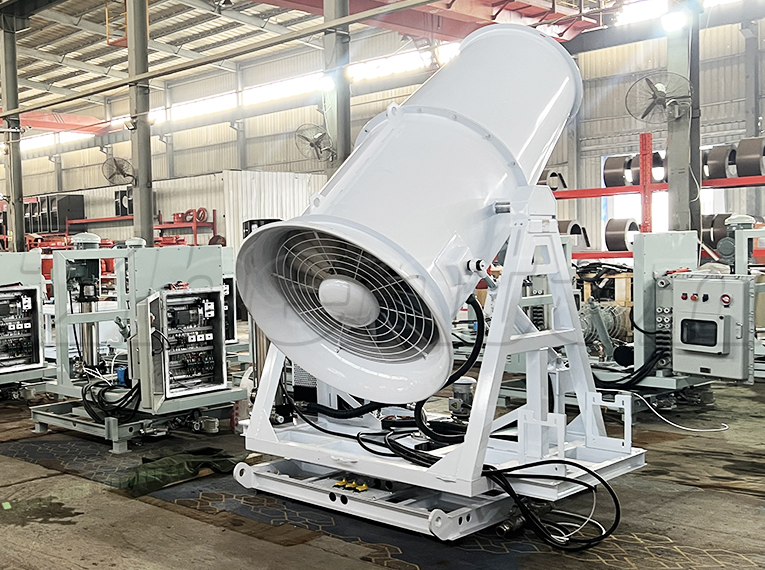
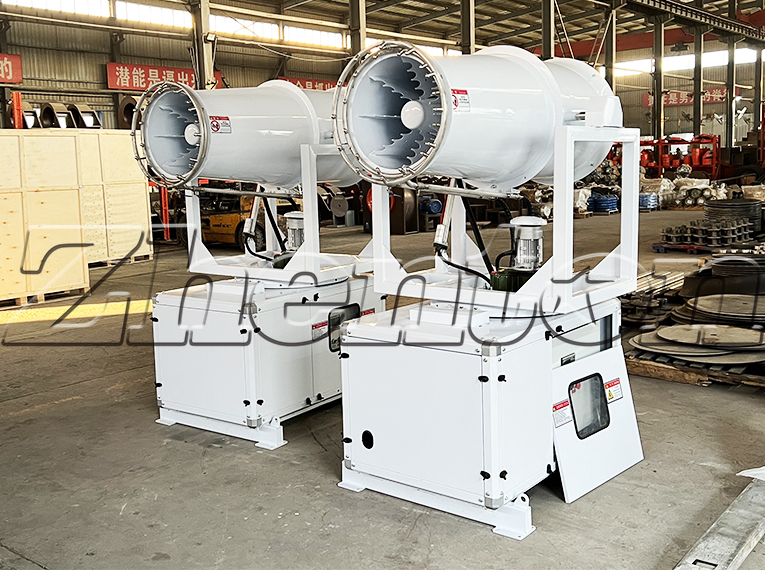
Mist fog cannon systems combine high-capacity fans with precision misting technology. The fan projects the mist over long distances, allowing it to reach dust sources that are difficult or unsafe to access manually.
In open-pit mining applications, mist fog cannons are commonly deployed at:
Drilling and blasting zones
Loading and dumping points
Crusher and conveyor transfer stations
Haul road intersections and ramps
The systems can be configured with adjustable spray angles, automatic rotation, and programmable operation schedules, enabling flexible response to varying dust conditions.
Practical On-Site Application Example (Adjustable Parameters)
At an open-pit mining site in Central Asia, operators faced persistent dust problems during peak production periods. Strong winds and dry weather rendered water truck operations inefficient, while dust complaints from nearby communities were increasing.
A dust cannon–based dust suppression system was installed following a site assessment. The solution included:
Fog cannons with a spray range of 120 meters
Fan motor power rated at 75 kW
Covering an area of 43,900 square metres
Automatic rotation covering xx degrees
The system was positioned near primary loading zones and crusher stations. After commissioning, visible dust levels were significantly reduced across the pit, even during continuous hauling operations. The mine achieved improved air quality while reducing overall water usage.
Frequently Asked Questions About Dust Suppression in Open-Pit Mines
Q1: Can mist fog cannons operate effectively in windy mine conditions?
Yes. With proper system design, optimized droplet size, and strategic placement, mist fog cannon systems can control dust under moderate wind conditions. For high-wind areas, multiple units and directional placement improve effectiveness.
Q2: Do mist-based systems increase water consumption?
No. Compared with water trucks and traditional spraying, mist fog cannon systems typically reduce water usage by targeting airborne dust rather than soaking surfaces.
Q3: Are mist fog cannons suitable for large mine sites?
Yes. Their long spray range and automated operation make them suitable for covering large areas with fewer units, reducing infrastructure and labor requirements.
Key Factors When Selecting a Dust Suppression System for Open-Pit Mines
Choosing the right dust suppression system requires careful consideration of site-specific conditions. Key factors include:
Mine layout and bench geometry
Primary dust generation points
Prevailing wind direction and speed
Water and power availability
Local environmental regulations
A customized system design ensures optimal performance and long-term reliability.
Dust Suppression as Part of Sustainable Mining
Effective dust control plays an important role in sustainable mining practices. By reducing airborne particulate emissions, mines can protect worker health, maintain equipment performance, and improve relationships with regulators and surrounding communities.
Dust cannon systems offer a balanced solution that combines efficiency, flexibility, and environmental responsibility. As open-pit mining operations continue to expand in scale and complexity, investing in advanced dust suppression systems becomes essential for future-ready operations.